Sunday, February 24, 2013
Response to Dom Cooper "Determination and the Legal Process"
I too was pondering this topic, here are a few of my thoughts. I believe the actions that are punishable would remain very similar, however the punishments may be altered in a determinist system. Current consequences involve protecting the public, trying to correct the problem, and just pure punishment. I think a determinist system would really try to push keeping the public safe, and influencing the offender enough that there "determined" future will be safer for society. One more question I thought about it could somebody still plead insanity if everything is determined?

Viscious circle
The arguments between naturalists and theists have not, and will not be solved anytime soon. The main problem is that you can not disprove either theory unless you look at it from the other theories perspective. If you believe in reason, and you don't believe there is a god you can say that there is no proof to show that god exists, and that because there is no physical evidence we should assume he doesn't. If you are a theist you would argue that god does exist and you would cite faith as proof. While naturalists don't believe faith is evidence, theists don't believe that humans can comprehend the works of god so they believe naturalists trying to use science and reason to explain everything is foolish. This viscious circle does not appear to be breakable in the near future.
Sunday, February 17, 2013
response to Siearra's post about cliches
The cliche "everything happens for a reason definitely ties into the topic of determinism, a few more cliches that tie into logic could be "It is what it is" which is essentially the law of identity. "Treat others the way you want to be treated" This could go along with what Aristotle says about morals, that we need others to live a good life so the reason we are good to others is so they are good to us.
First I want to say that the last line you used "I am simply determined to be free in my decisions" was very clever and interesting. I also think you made some good points when you were almost asking what would the implications be if we sided in one direction or the other. I think the question of what the implications are is as large as the initial question itself.
A cool experiment you should watch!
Interesting video that shows a very odd result. It shows the presence of someone watching changing and object. Sorry for how cheesy the video is
http://www.youtube.com/watch?v=DfPeprQ7oGc
http://www.youtube.com/watch?v=DfPeprQ7oGc
A World of Probability
Quantum mechanics, one of the most excepted and accurately tested theories in physics tells us that the world may not run on absolute laws, but rather on probabilities. Quantum mechanics says that the reason classical physics seems to work at the macro level is because it takes the most likely outcome. The reason we don't see these probabilities in physics is because at the macro level the probabilities of the expected result are so high that it could take over a million years to get a different result. On the micro level these probabilities have been tested and seen many times. I am not sure if this proves that we have free will because probability is not choice, but I do believe this proves that the world is not completely determined because probability plays a role.
Sunday, February 10, 2013
response to Siearra Edition "Is Prior Knowledge Important
"Is Prior Knowledge Important" Plato believed that humans should all just "know" whats good and bad based on "built in knowledge" I believe that he is completely missing how much humans learn from experience. He believes that as we grow older and wiser we learn how to tap into already known knowledge. I find it odd that a man who so strongly believed in reason would come to this conclusion. To me it seems like the longer we live, the more we see, and if we properly exercise reason we can connect things together to find answers. I also think Plato pushes the subconscious mind away in the learning process. As humans we probably learn as much subconsciously as we do consciously.
Following are pictures of 3 fish, you may or may not already know what type of fish these are, but if I were to ask the question "Which of these fish can fly?" Which would you choose? I think almost every college age student whether or not they know anything about fish would choose the one on the bottom that has fins shaped like bird wings. So does this mean that seeing the picture and me asking a question revealed prior knowledge you already had? If so how come if I ask the question which fish has the longest life span only people with knowledge on fish would know? I believe this is because much of our knowledge comes from taking observation and consciously as well as subconsciously piecing things together to solve problems. In this case we can guess that the fish with fins shaped like bird wings would be the one capable of flying, why? Because we can take prior observations of flying things such as birds, bats, airplanes, and apply the concept of wings to the fish. This is because of prior observations and the ability to reason, not some built in knowledge that comes from the world of forms. (I am aware of the fact that many of us may already have some knowledge of these fish, the point is that even if we had never seen/heard of these 3 types of fish we could most likely still answer question 1)
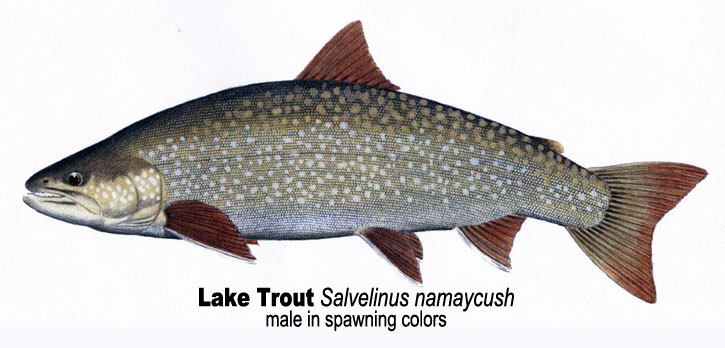


Following are pictures of 3 fish, you may or may not already know what type of fish these are, but if I were to ask the question "Which of these fish can fly?" Which would you choose? I think almost every college age student whether or not they know anything about fish would choose the one on the bottom that has fins shaped like bird wings. So does this mean that seeing the picture and me asking a question revealed prior knowledge you already had? If so how come if I ask the question which fish has the longest life span only people with knowledge on fish would know? I believe this is because much of our knowledge comes from taking observation and consciously as well as subconsciously piecing things together to solve problems. In this case we can guess that the fish with fins shaped like bird wings would be the one capable of flying, why? Because we can take prior observations of flying things such as birds, bats, airplanes, and apply the concept of wings to the fish. This is because of prior observations and the ability to reason, not some built in knowledge that comes from the world of forms. (I am aware of the fact that many of us may already have some knowledge of these fish, the point is that even if we had never seen/heard of these 3 types of fish we could most likely still answer question 1)
Where I believe Aristotle's views of Hapiness miss a key factor
Aristotle believed that there was one true way to achieve happiness. As we talked about in class he believed that a person who attempts to live the good life, fails, and is miserable is living a better life than a fool who seems happy but has not pursued reason. I do not agree with these beliefs. I can see where Aristotle could think that a fool could be tricked into thinking he was happier than he really is. This is my biggest problem with the subjectivist view as well. I fully buy into the idea that someone can think they are as happy as possible because they don't realize that what they are missing. Where I strongly differ from Aristotle is how we achieve maximum happiness. I do believe that it is different for each person, however there are some common things that humans want. Things like self fulfillment, and relationships with friends/family are important to almost everyone, but the balance of how important each thing is changes person to person. Every person has a different balance of pursuing long term goals vs short term pleasure and I believe humans need to fulfill both of these to achieve true happiness. The example I will present would be a nurse vs a medicine scientist. A medical scientist could spend his entire life to develop a medicine to help arthritis, he could accomplish his lifelong goal be very happy, in the process he gave up some day to day pleasure and satisfaction. A nurse could spend everyday helping people and receive a lot of day to day happiness, but in the process she is not as actively pursuing a large lifelong goal. My argument is that these are two different routes to a happy career/life, and there is no reason to think that one way is better than the other. This is where personal taste to me plays a central role in achieving true happiness, and where Aristotle seems to leave out the personal traits that make people individuals.
Subscribe to:
Comments (Atom)